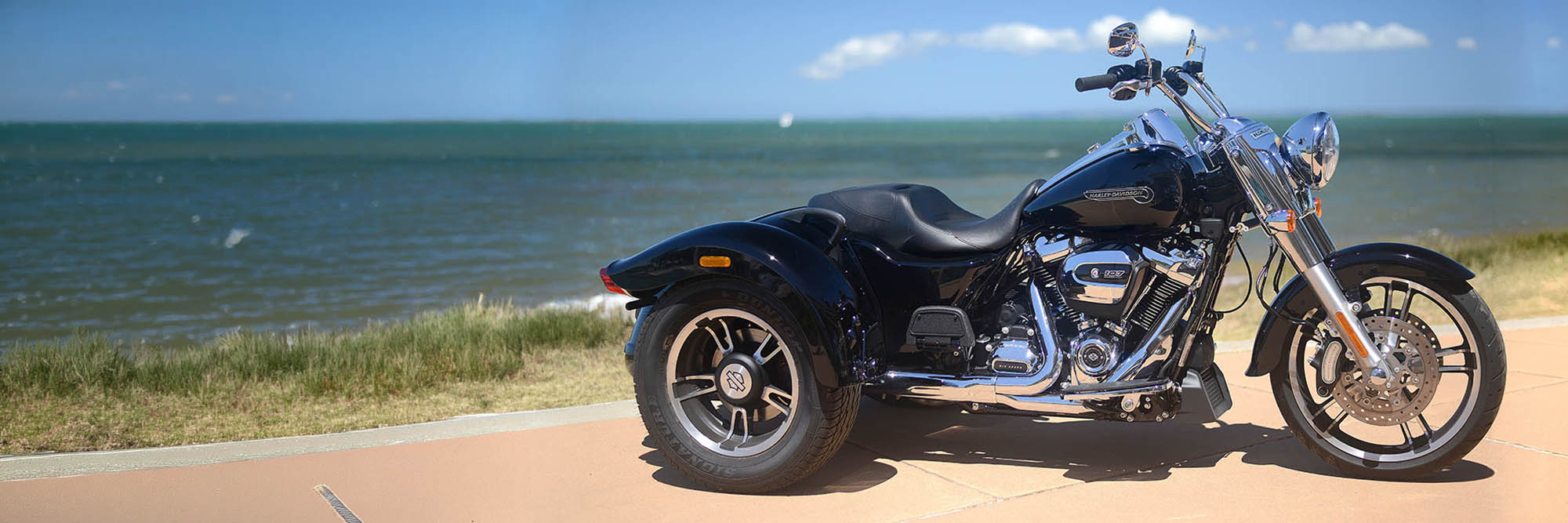
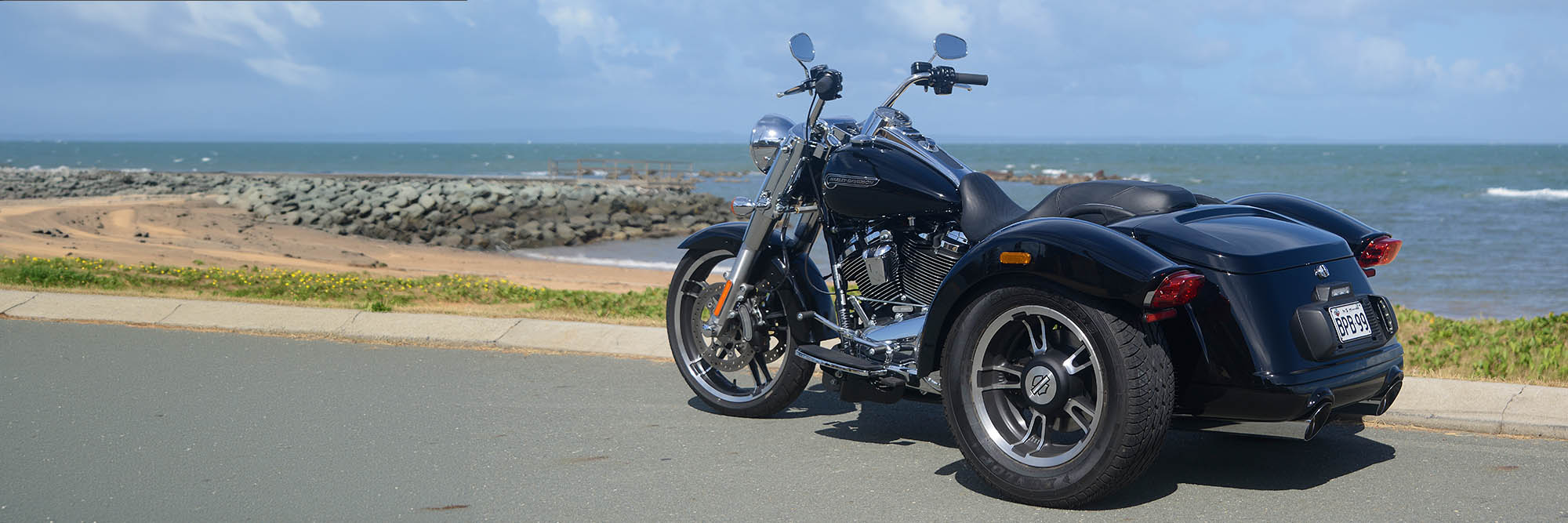
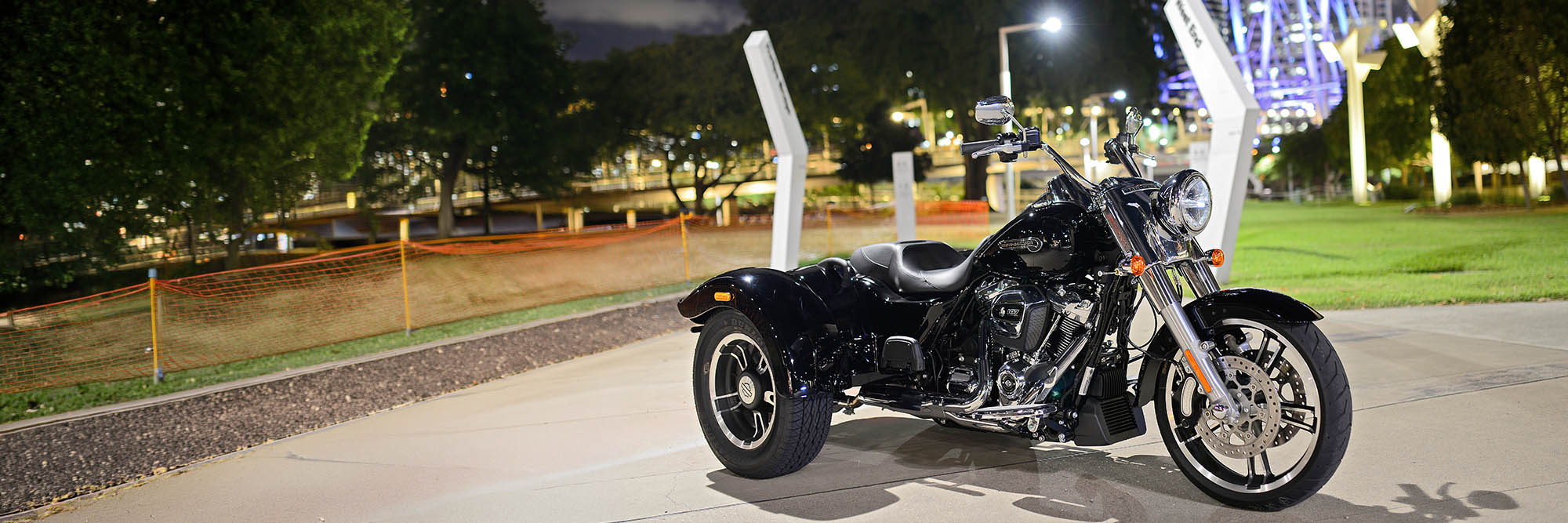
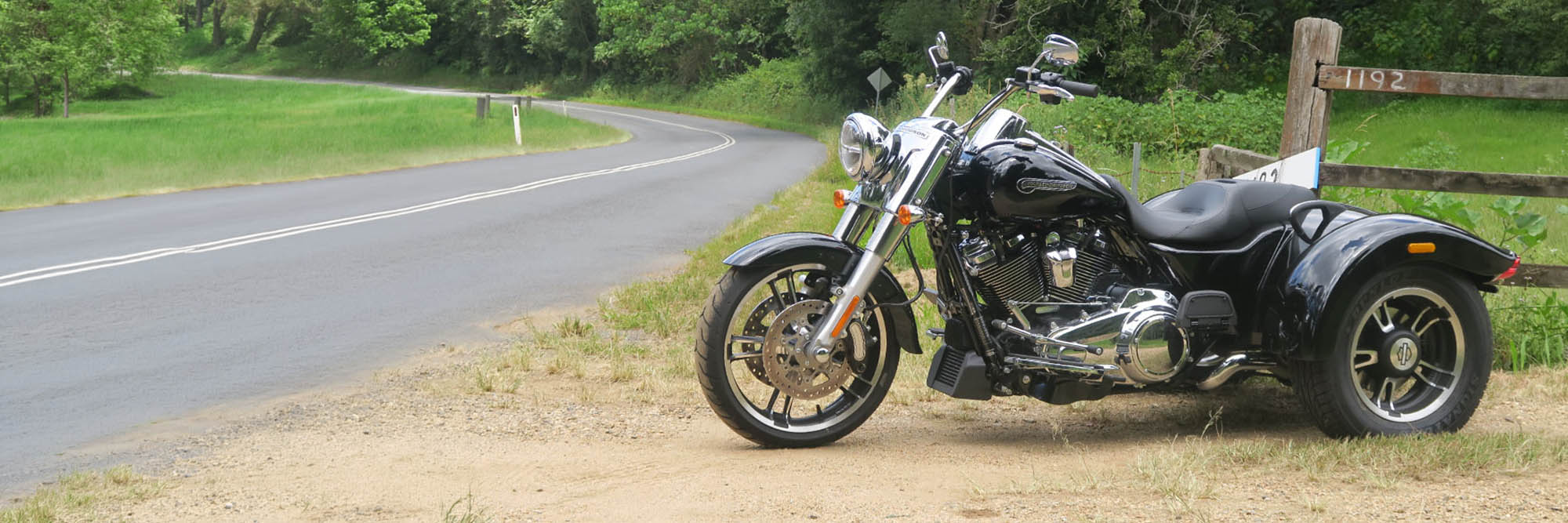
DATELINE JANUARY 2018: Harley’s three-wheelers have finally been approved for sale in Australia and Dave had first go on the new pared-down hot rod.

Firstly, let’s paraphrase what just about every motorcyclist I talked to about the Freewheeler had to say — and they were always plenty happy to offer an opinion.
“Trikes have the worst aspects of a car and a motorbike. You can’t carve up the traffic and lane split like a bike and you don’t have the weather protection or carrying capacity of a car.”
Well, yes, all that is true, but the mitigating fact is that the Freewheeler is simply, remarkably and infectiously good fun.
It’s a roller coaster ride with a barrel of monkeys, a G-force thrill machine and a downright hoot.
How much fun?
Yes, not being the first away from the lights every time can be a pain, yes I did get rained on, but my goodness, I soon forgot about all that as I was punting it through daily test rides and laughing to myself almost non-stop with the sheer joy of it.
If you are looking for a big fun, celebrity ride, then seriously, check one — with one proviso.
It was great fun after I got myself out of motorcycle mode and into trike mode.
If you aren’t already in that trike mode, or don’t have a lot of experience on three wheels, please don’t judge either of the new models — Tri-Glide or Freewheeler — on a short test ride. I’ve tested several, here and overseas, and they still take me a while to get that tri-mojo back.
The way it usually works is I spend the first few hours fighting the vehicle; trying unsuccessfully to forget about leaning and body English and the way of normal riding.
Then I gradually remember to just sit there, hang on, and push and pull the handlebars. That works well enough for about the first tank full of gas and from there on the fun really starts.
I gradually get into a proper trike mode and start using the G-forces that the non-leaning vehicle generates. They help throw it harder into the corners. It’s a matter of letting it push you to one side, lock elbows and let the centrifugal force help pull on the bars.
No trouble
When I was finally back in that space I had no trouble keeping up front with my mates on their Softails and Baggers during our weekend rides.
We hit the long sweepers around the back of the Gold Coast’s Hinze Dam, Burringbar range and down through the glorious twists and turns of the NSW-Qld border country — and I found myself grinning like a cheese-eating idiot all the way.
The only time I fell off the pace was over the rough and rutted roads around Murwillumbah. They still bear the scars of last year’s flooding and required a little more circumspection.
Three contact points on rutted tarmac tend to make for a choppy ride, because there is not only fore and aft movement in the suspension but also lateral, side-to-side movement as well. It was all manageable, just not quite as comfortable as the Baggers on the really rough going.
The fact that it was manageable at all — and it was really rough in spots — is also testament to the quality of the suspension and the trike’s dynamics. I didn’t experience any jarring, bottoming out or anything untoward at all, at any time during the test. It’s matter of getting used to the way it rocks … and rolls.
The specially reinforced trike chassis no doubt helps.
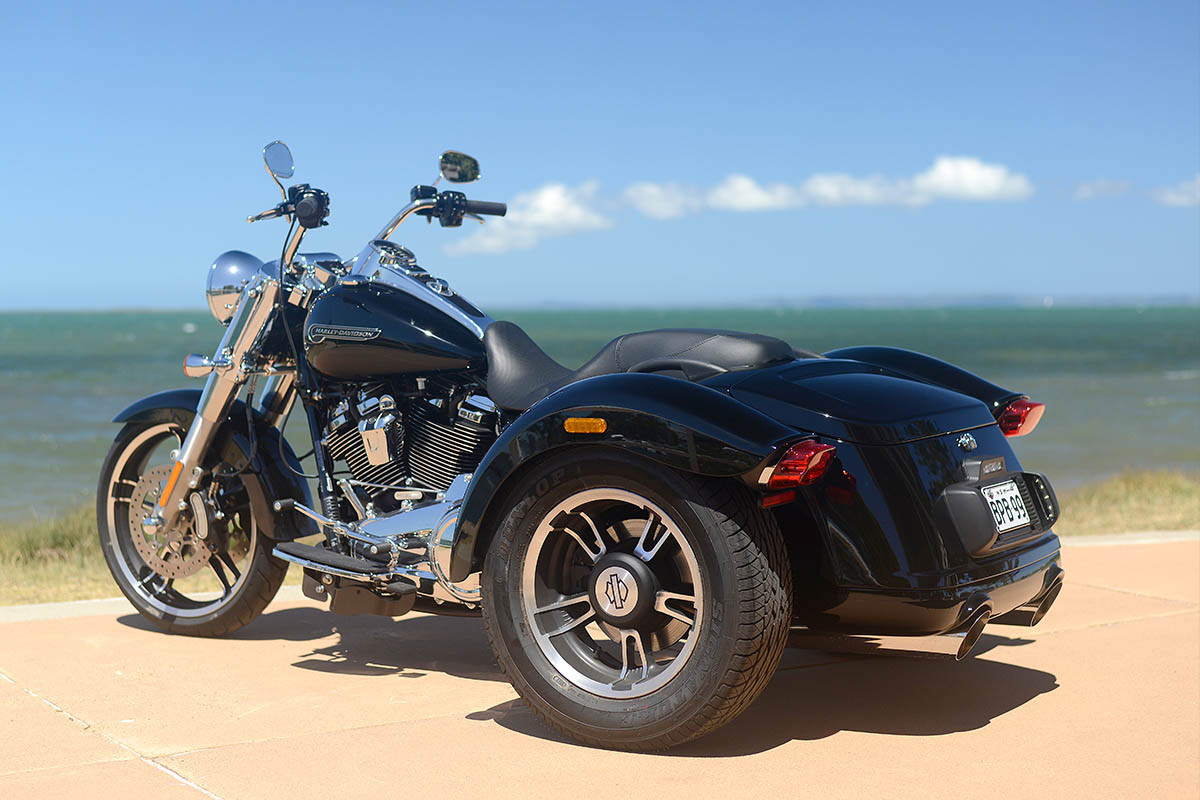
The only downside I found was that the larger side covers and rear bodywork did reflect more heat on to the back of my right leg than other M8s. It wasn’t excessive, but it was quite noticeable even with my long legs.
Otherwise I found the 700mm-high saddle to be all-day good and the overall comfort levels to be likewise. Harley claims that the 12-inch mini apes help with the handling and ergonomics of the machine and I couldn’t argue. I found the Freewheeler to be comfortable for both long and short rides — and I did spend plenty of time aboard.
There are windscreen options available if that is your preference too.
Hang on luv
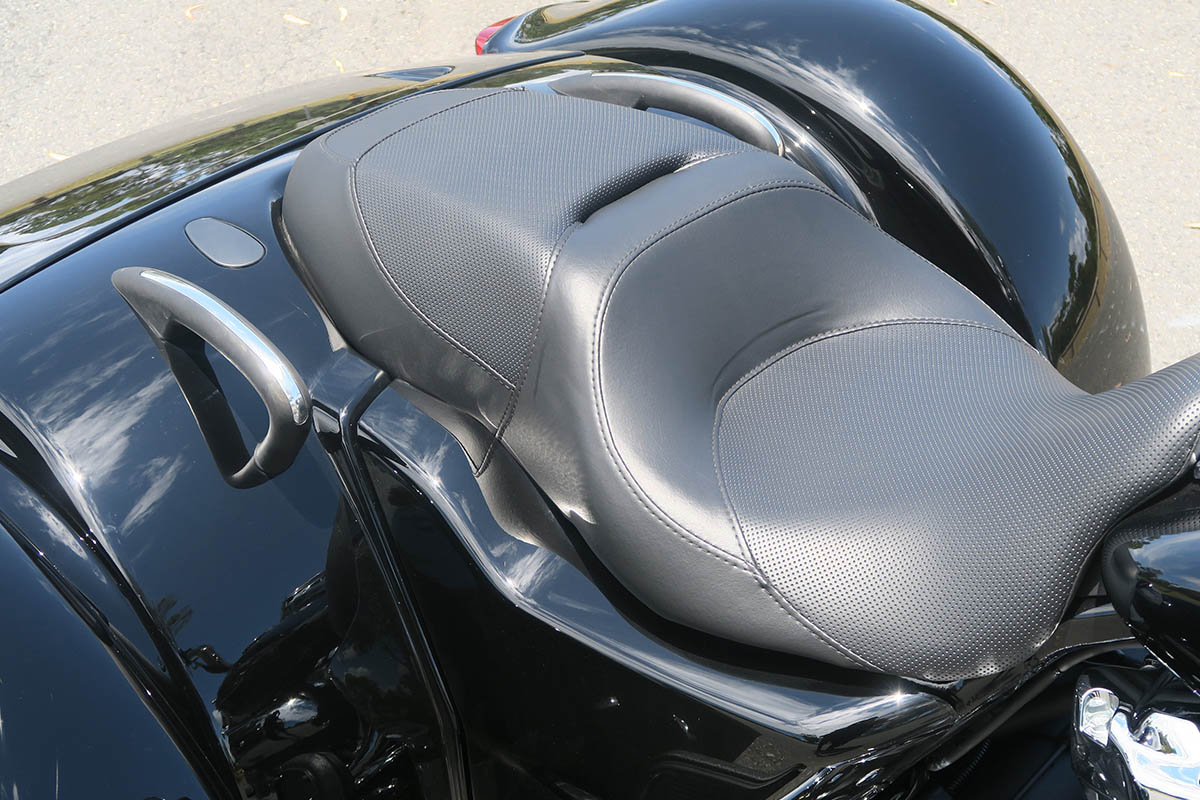
I suspect a pillion passenger would not be as comfortable.
There is a reason for those two big handles on either side of the rear seat.
As you know, when leaning a two-wheeler into a corner the centrifugal forces push the rider down into the saddle. That isn’t the case with the trike. Its non-leaning G-forces want to push the rider and passenger off the machine.
It all adds to the fun when you are in control, but if you are looking at a trike as an option for a passenger who doesn’t feel secure on two wheels then I’d definitely suggest taking them for a test ride first.
If you have a teenager that likes wild fun park rides — the Freewheeler is the business.
The fully kitted Tri-Glide’s large rear wraparound throne would be a better option for a more timorous passenger.
It’s also worth noting that the trike does require more upper body strength than a motorcycle to really punt it along. The rider still has to counter those G-forces too.
Under Pressure-s
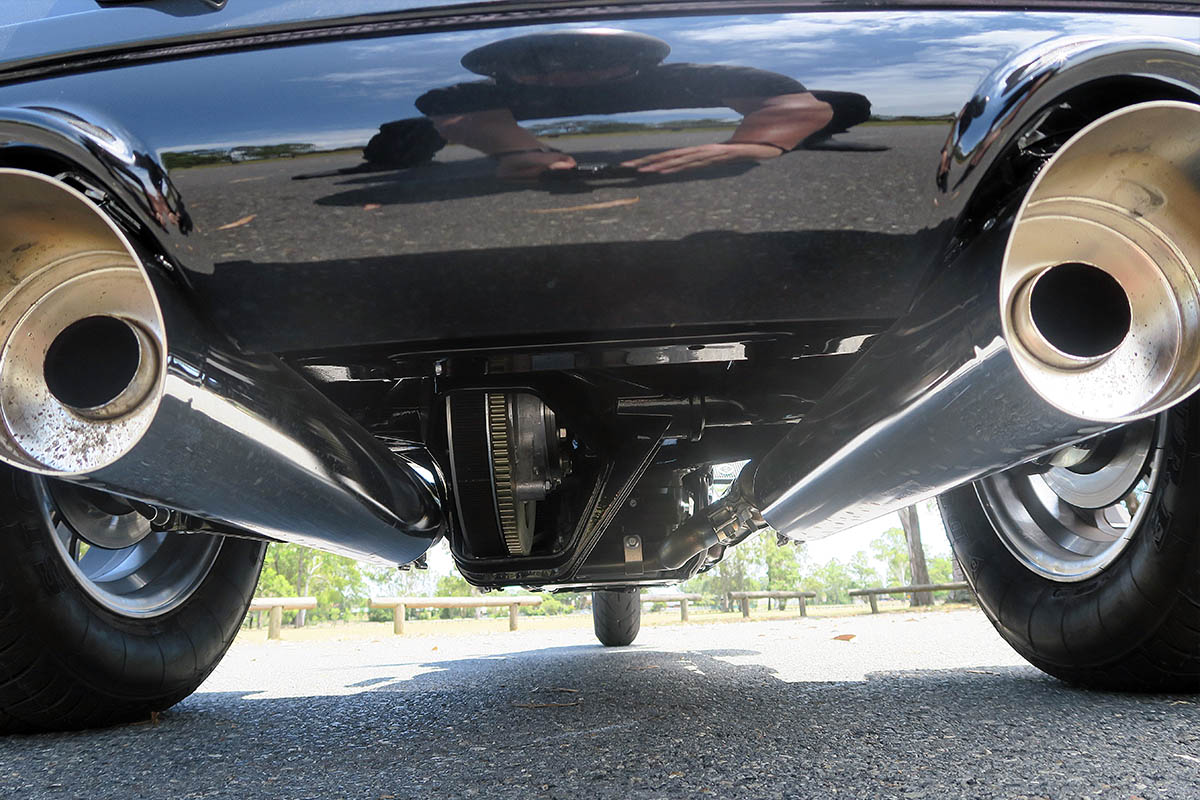
Another key to really enjoying the ride is having the correct air pressures all around. It’s one of the most sensitive vehicles for appropriate pressures I’ve tested. Even a few psi out will affect performance and require significantly more effort from the rider.
The twin 15-inch Dunlops on the rear run pretty low pressures — 26psi — while the 19-inch front runs 36psi. Also very important to the ride quality is dialling the correct amount of wind into the rear suspension.
I ran between 40 to 50psi for most of the test and that worked really well for my payload. Getting the numbers right has a significant effect on the amount of effort needed to get it around a corner and the amount of body roll the trike develops.
Check the numbers before you test ride. Get yourself one of Harley’s special suspension pumps as well — if you are lucky enough buy one.
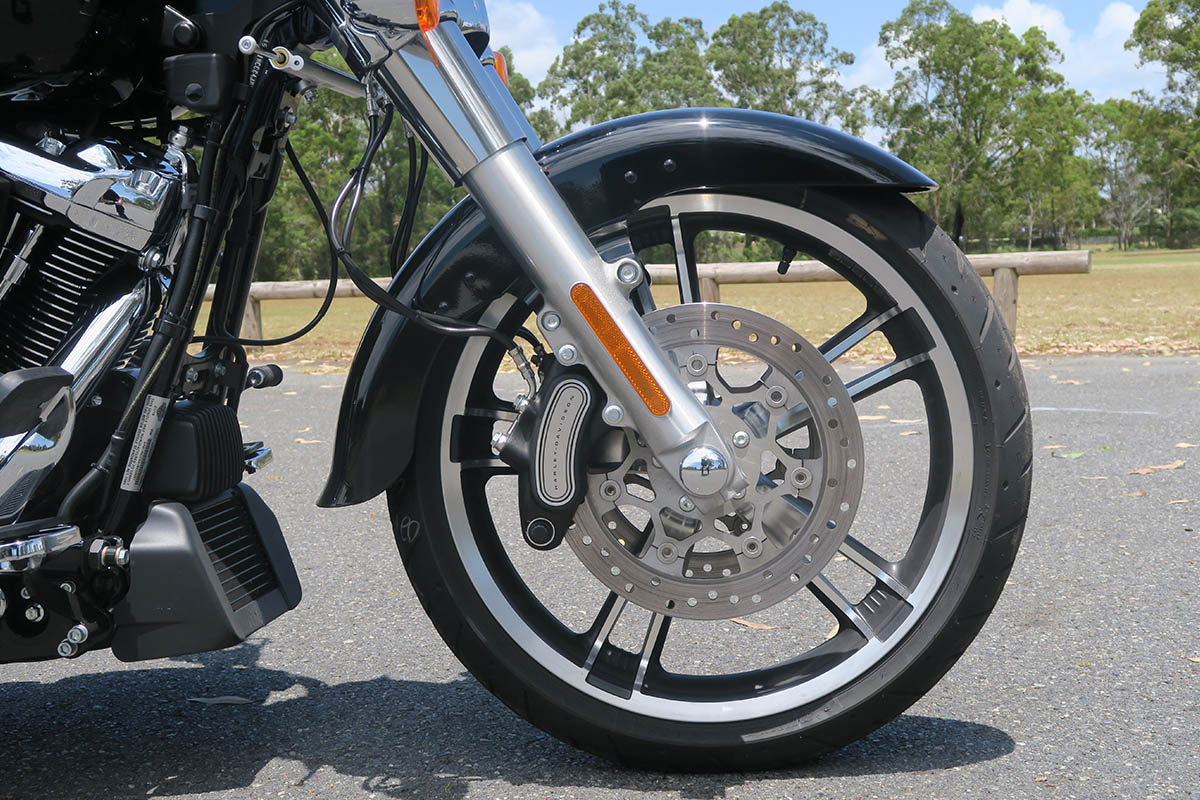
The 49mm telescopic front forks worked as well as the two-wheel version’s for soaking up the bumps and the prominent steering damper attached to the left leg no doubt helps keep it all in line.
The stop and the go
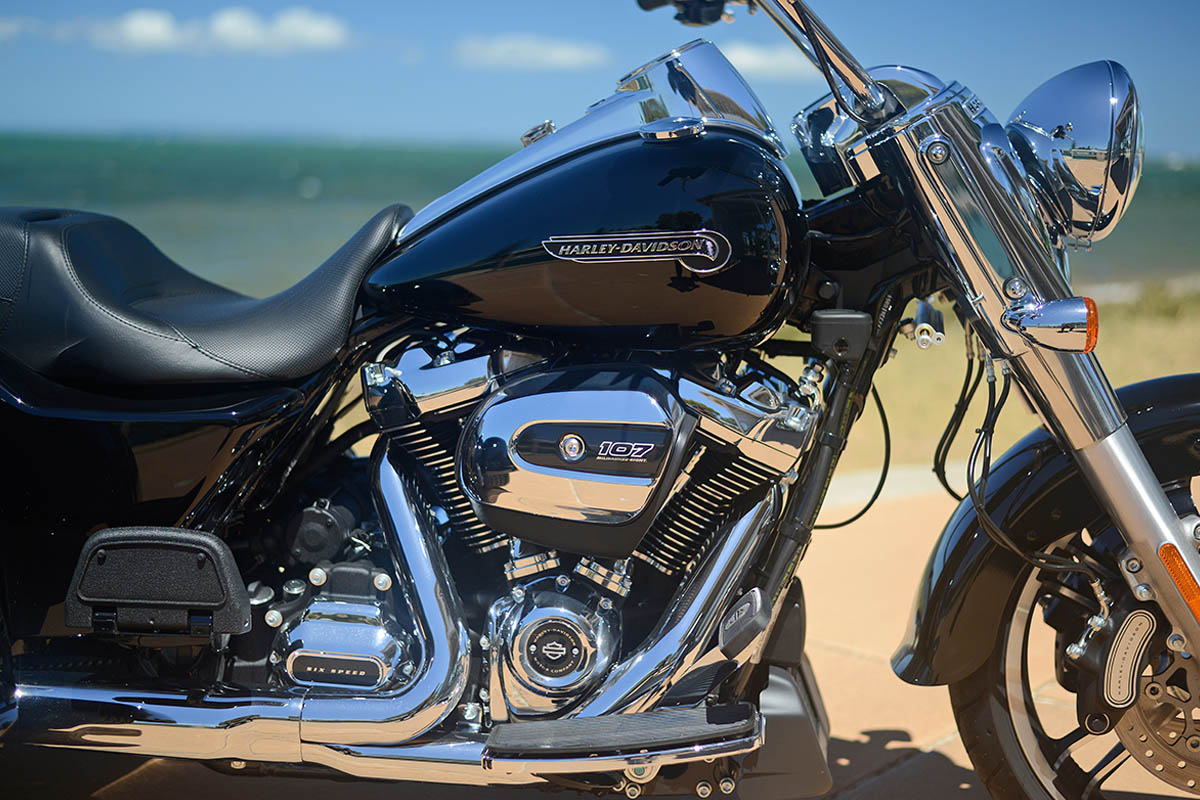
The now familiar Milwaukee-Eight engine, with 100 x 111.1mm bore and stroke and 10:1 compression ratio, pushes the Freewheeler along effortlessly.
With 150Nm on tap it’s a strong-feeling power plant, even though the trike weighs in at a tad over 500kg in running order. She’s a big girl, but still launches really well and top gear cruising at inner-city speeds showed no signs of lugging or stress.
It actually cruises better in top gear than the Touring models and that’s down to the fact that the gear ratios are lower. Top gear is 3.157 whereas a Road King, for example, is 2.875.
The extra mass and lower gearing had some effect on fuel range, though it was still quite acceptable considering it was a brand-new engine — 24km on the clock when I collected it.
I saw the fuel warning light come on at around 250km during a mix of city and country riding and was filling up at around 300km with 50km or so showing on the range computer. That should improve as the engine runs in.
For a brand-new unit the six-speed Cruise Drive gearbox was as faultless as the other M8s I’ve ridden and the hydraulic clutch was typically light and easy to engage.
For such a big unit the stopping power provided by the twin six-piston front and linked single-piston rear brakes was also very impressive.
I gave it a couple of really hard, straight-line crash stops just to see how it pulled up — and it really surprised me. Because of the bigger contact patches and the fact that it can’t fall over really does mean you can stomp ’em and it stops on a dime.
The parking brake is foot-actuated with a pedal behind the left-hand footboard and the electric reverse gear will push the machine slowly backwards up a slight incline. In most cases, on flat ground, it’s quicker and easier to just hoof it.
The niceties
That great engine, suspension, gearbox and brakes are all complemented by the standard Harley niceties. The retro-tech is well incorporated with the LCD display housed in the large analogue speedo.
It can show clock, tacho, gear selected, odometer, two trip meters and fuel range. The new, larger idiot lights are nested below. Park brake and reverse warning lights are in the main display.
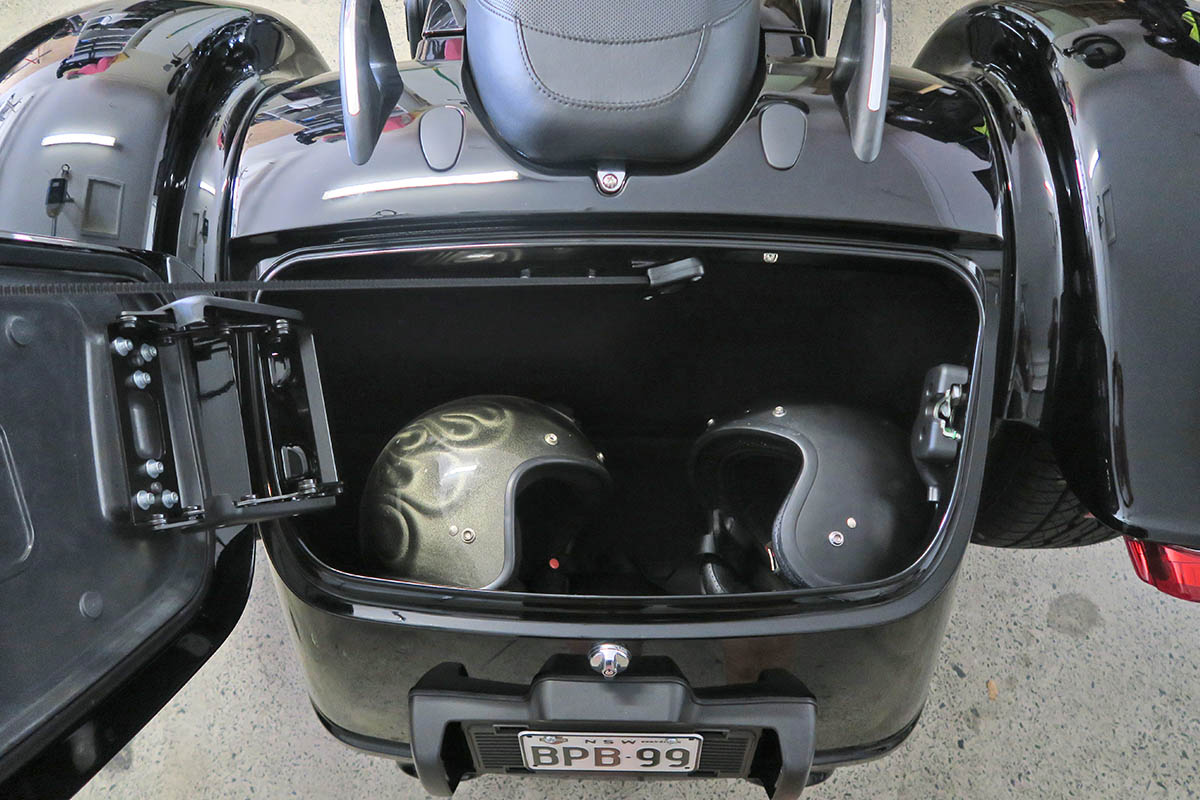
The rear, side-opening trunk can easily accommodate two helmets, jackets and a small camera bag — or a few dozen stubbies — meaning you will be especially welcome on camping expeditions.
It even has a loud, old-school Harley horn, unlike the beep-beep units on some of the new Softails. The headlight sits in and above a beautiful chrome nacelle and it projects a wide, flat and brilliant beam.
Overall
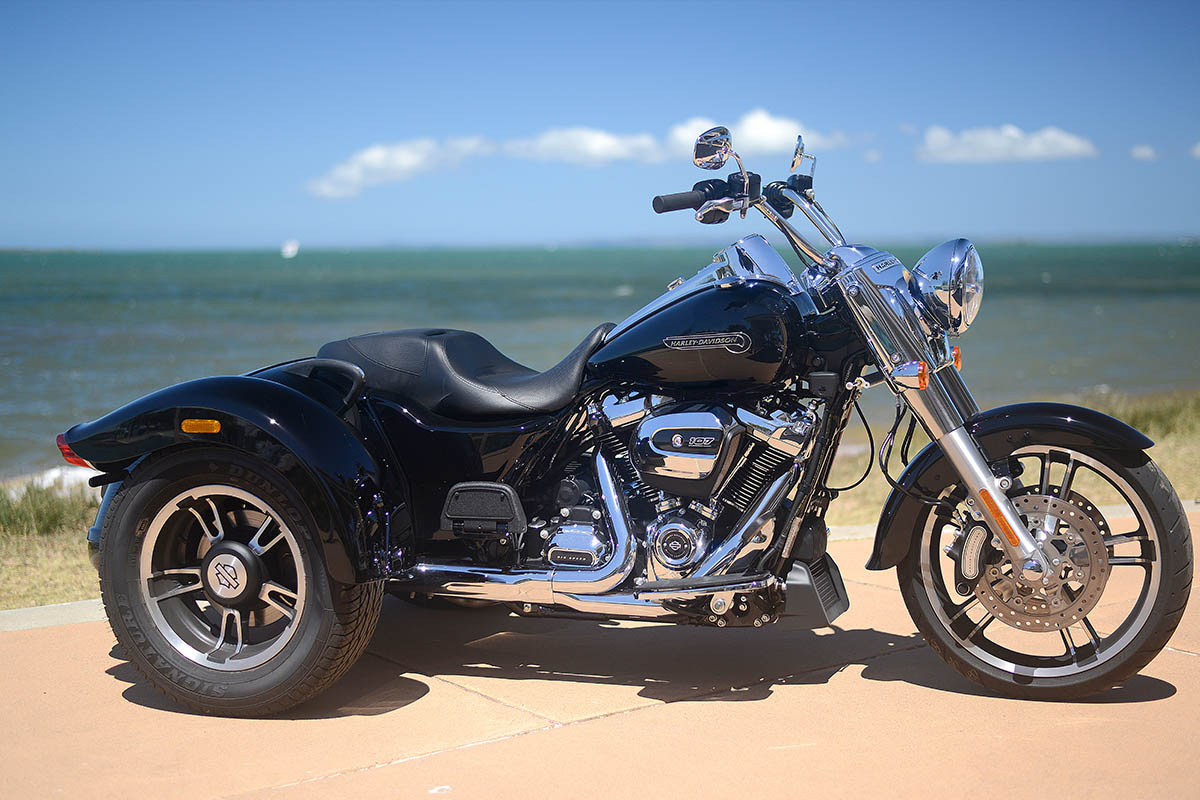
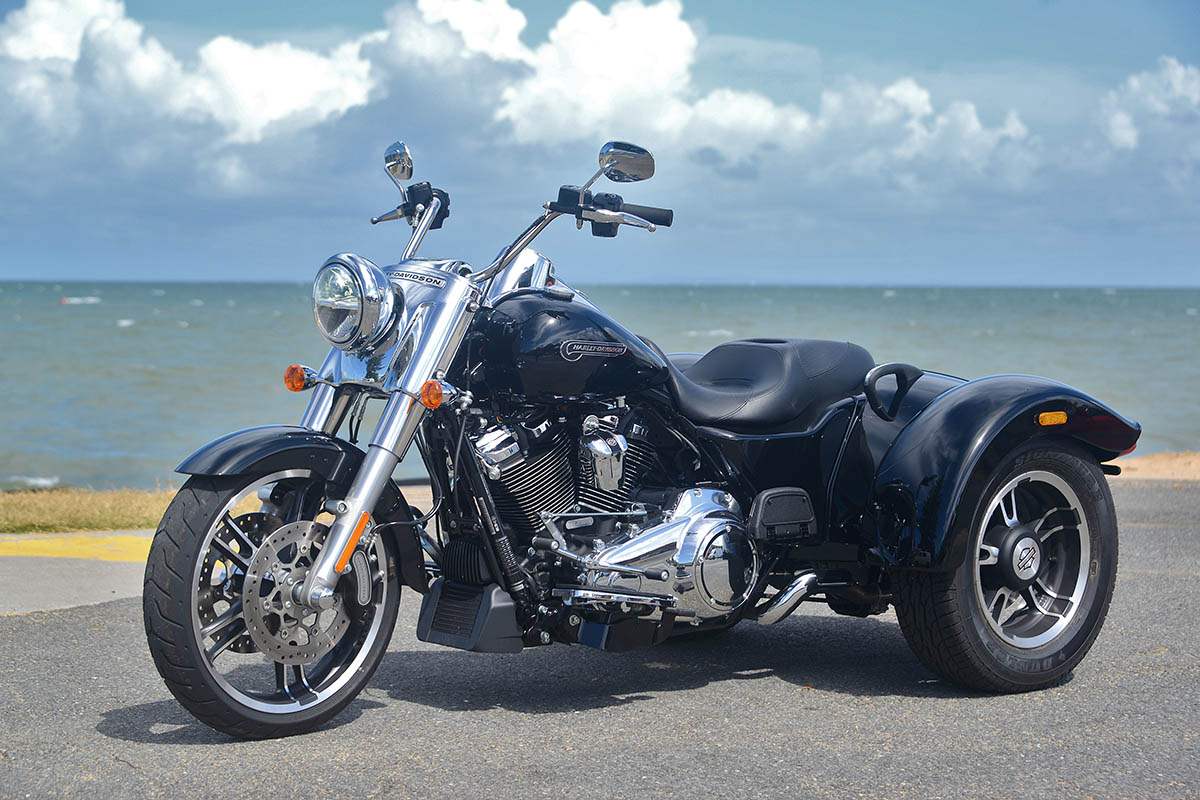
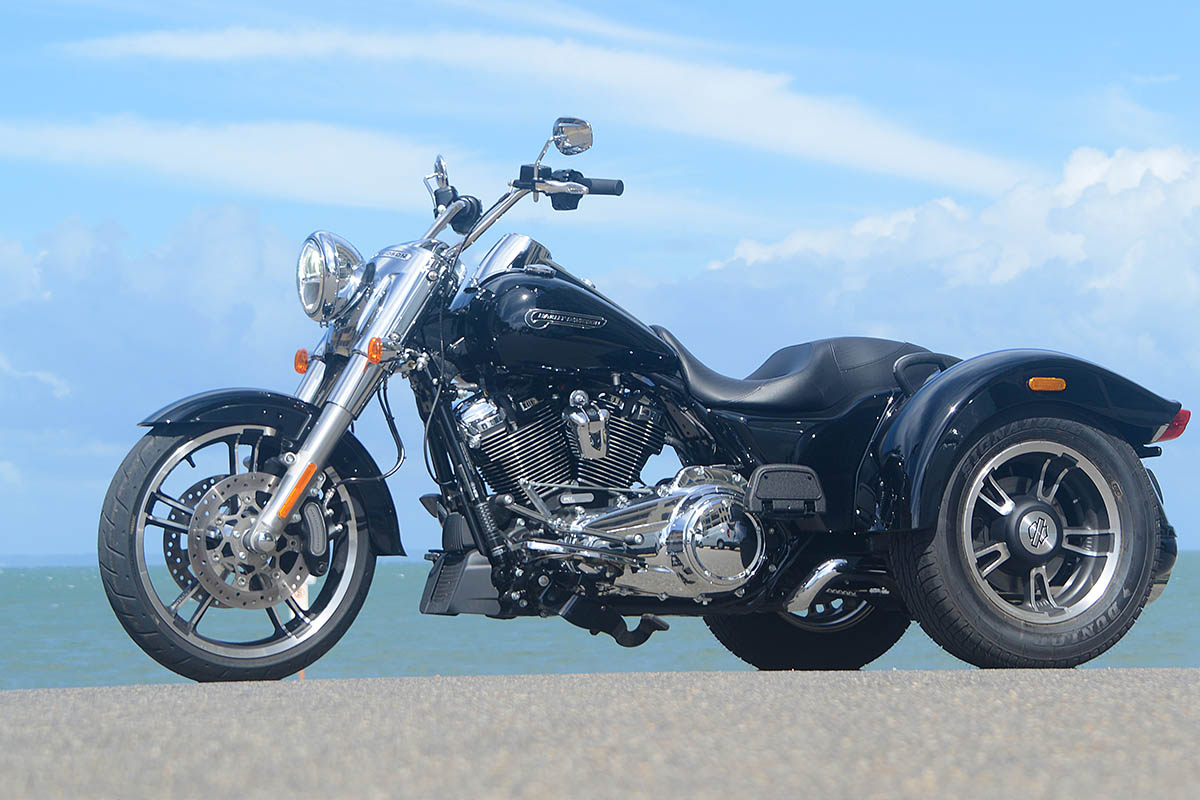
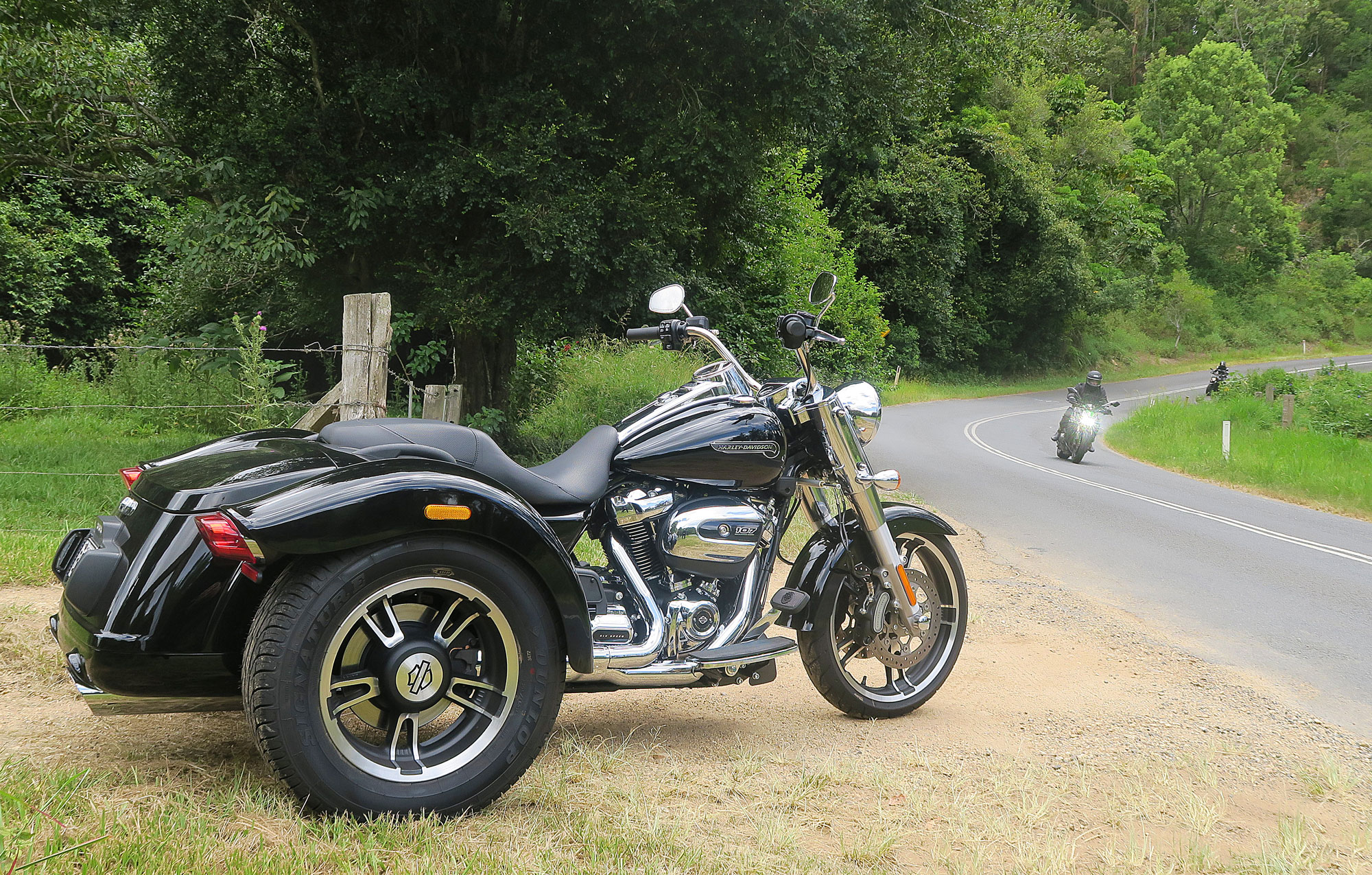
I looked forward to every ride I had on the Freewheeler. I found its combination of wide expanses of lustrous black paint, copious amounts deep chrome, hot rod slingshot styling and attention to detail made me glad just to look at this unusual machine.
Riding it was even better.
If you are looking for something different and a change from the ordinary, then the Freewheeler is definitely worth a try. I called it a celebrity vehicle because everybody wants to talk about it — everywhere you stop. A real head turner.
At around $40k it’s not cheap. It’s not a motorcycle. It’s not a car. It is in the space in between, and as some of life’s haters will gladly sneer, it has all the disadvantages of both.
But just remember next time you see (or ride) one, the rider is having some serious fun and a grand adventure … on every corner.
Guts and Bolts
Performance
Torque150Nm
Torque rpm3250
Engine torque testingEC 134/2014
Running order507kg
Engine
TypeMilwaukee-Eight 107
Bore100mm
Stroke111.1mm
Displacement1745cc
Compression10.0:1
Fuel systemESPFI
ExhaustShorty slash down chrome mufflers
Frame
Length2615mm
Seat height700mm
Ground clearance125mm
Rake26°
Trail101mm
Wheelbase1670mm
Front tyreMT 130/60B19 M/C 61H
Rear tyresP205/65R15 92T
Other
Fuel capacity22.7 litres
Oil capacity4.9 litres
As shipped492kg
Luggage volume0.06m³
Primary driveChain, 34/46 ratio
Front brakes6-piston fixed calipers
Rear brakesLinked rear pistons
Test Blog Extract:
Trike Mode on and
Riding with the Rascals
Day Three of testing Harley’s new Freewheeler for Heavy Duty Magazine and I’m finally back into Trike mode.
It takes me a few days to stop riding a motorcycle and get the “just-sit-there-and-pull-the-handlebars” mojo needed on a trike. That’s when it all finally clicks and I stop fighting the vehicle and start to utilise the G-forces that the non-leaning machine generates. Then they help to swing on the bars even harder and corner with even more confidence.
By the time we got halfway up the hill from the Gold Coast to Advancetown I was right back in the zone that I last had when I tested several Tri-Glides during the 10 years I lived in NZ — and worked in the shaky Isle’s bike press.
The big thing is that unless you are already in Trike Mode, don’t judge the new ones on a short test ride. They take a while to get.
As most of you would know, the M8-equipped Tri-Glide and the new Freewheeler have finally been approved for sale in Aus — and we’ve got HD-A’s press unit that only had 24km on the clock when I picked it up on Friday.
I’d already spent a couple of days and nights wrangling it around Brisbane but today I set off reasonably early — for a Sunday — and headed 40 minutes down the M1 to hook up with Rowey, Lursie and Roberto at Coomera.
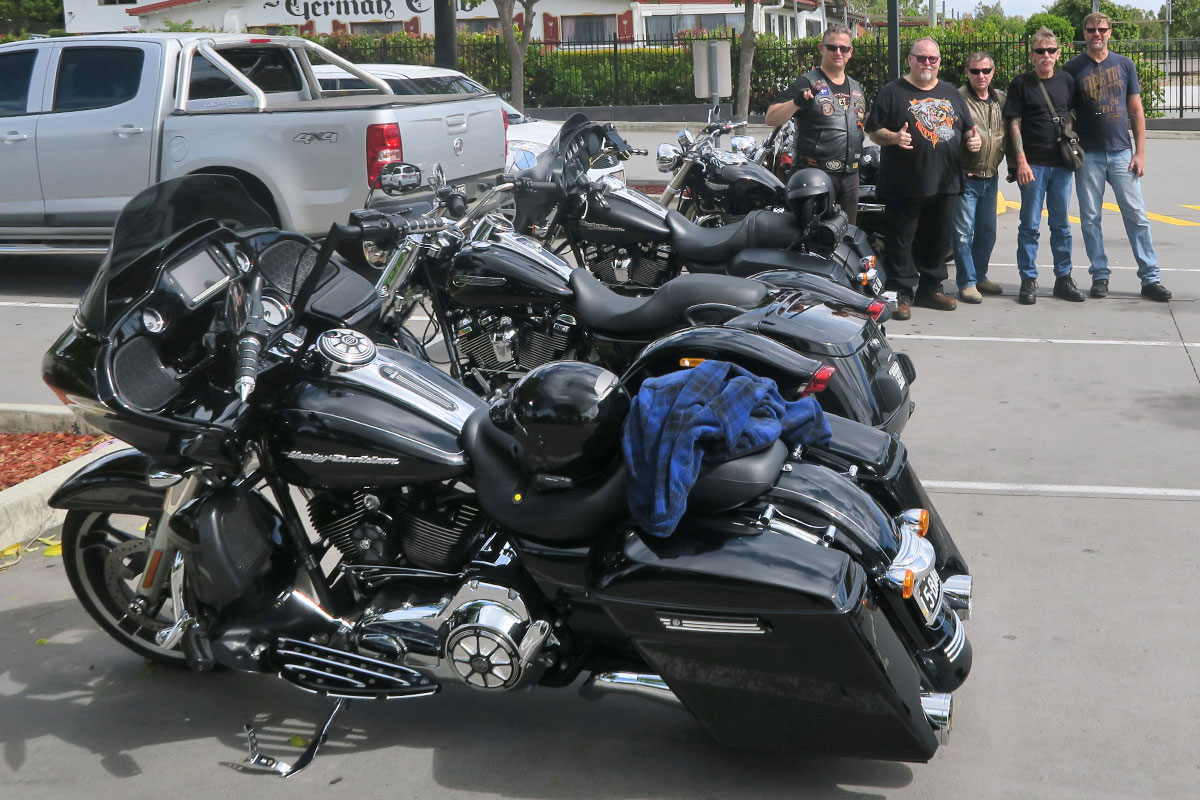
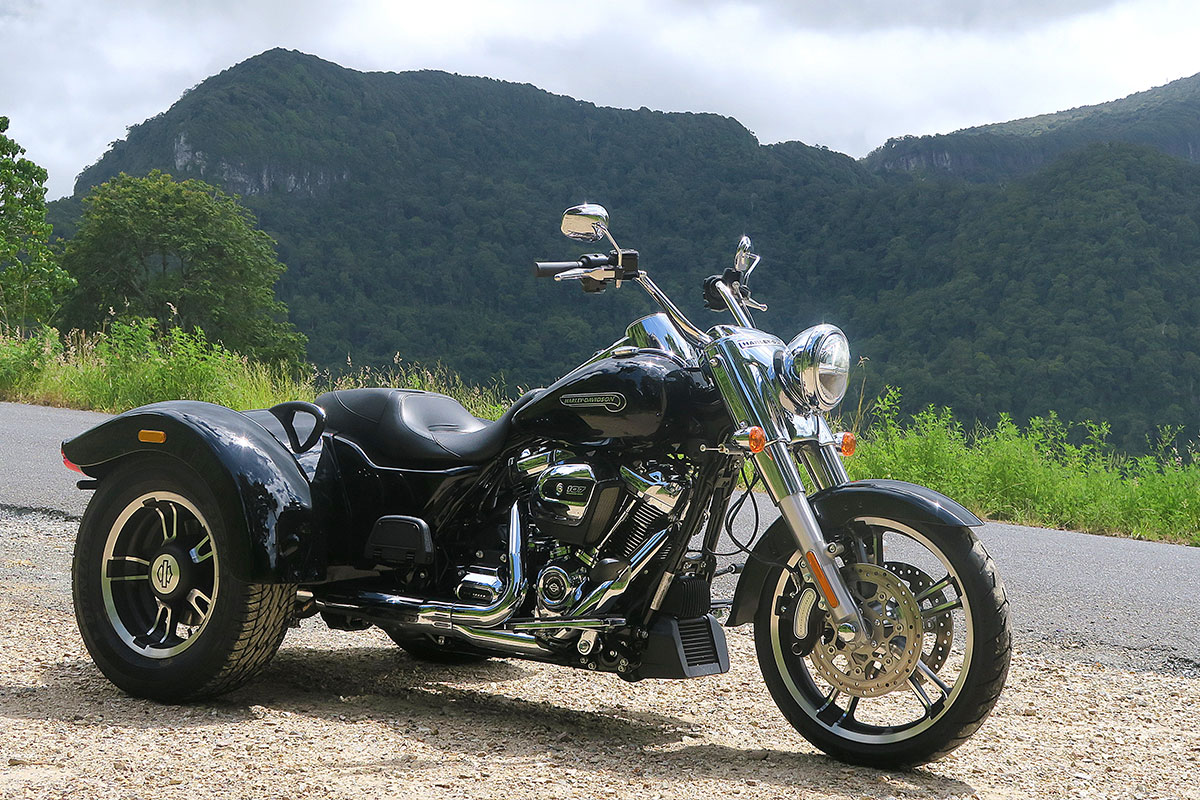
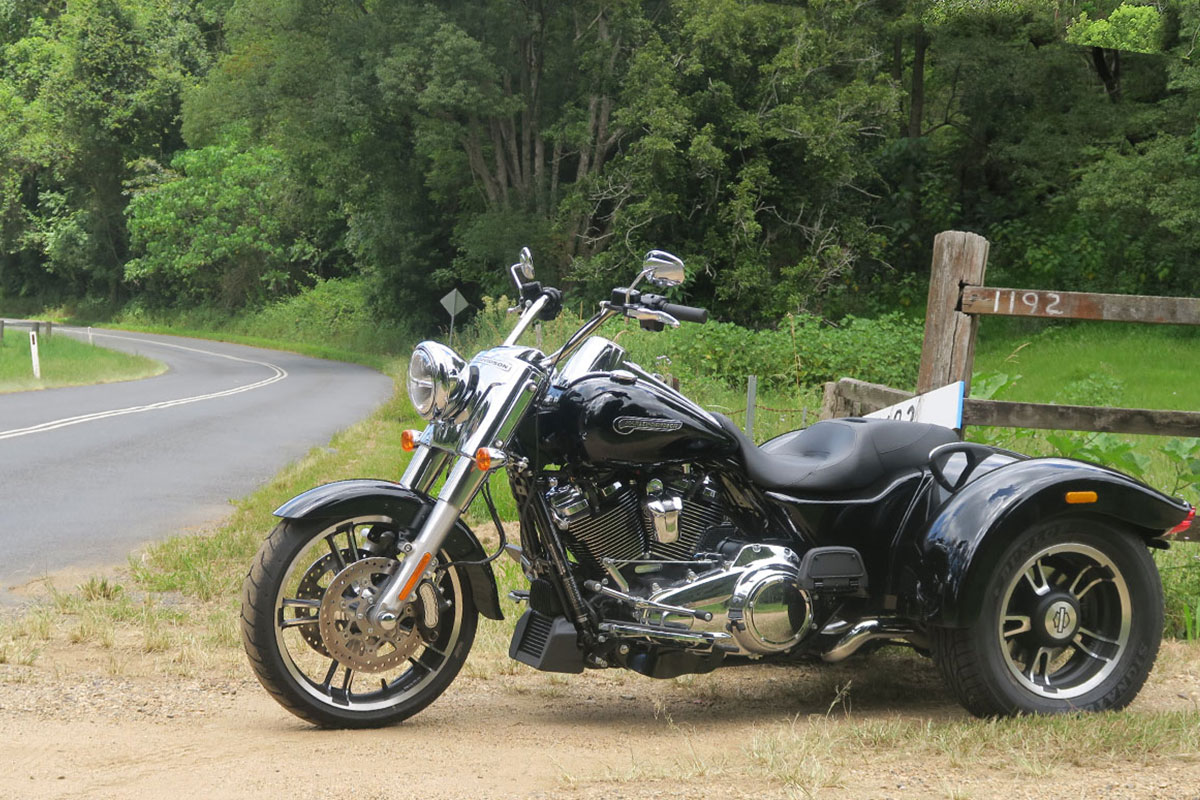
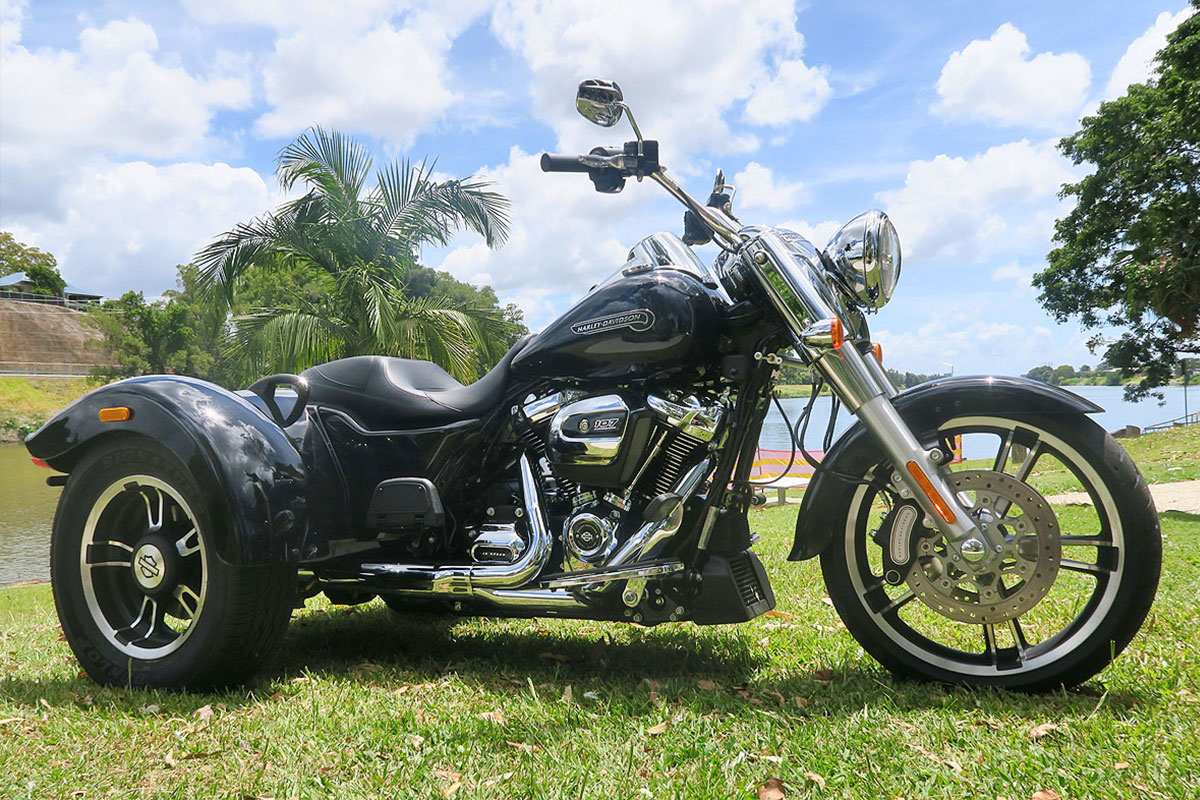
After salutations we headed further south down the freeway and Sutho and Spook joined up at Merrimac. From there we headed west to the Hinterland hills. It was a great way to test and measure the performance of the Freewheeler.
Yeah yeah, like everyone always says: “Trikes are the worst of a bike — no protection in bad weather etc etc etc, and the worst of a car — bad in traffic, no lane splitting etc etc etc” — and they aren’t wrong.
But after almost 500km in the last few days, I reckon the mitigating fact remains that the Freewheeler is, in conditions like we enjoyed today, serious fun. No, not motorcycle fun, different fun, but big-time fun all the same.
Around the long sweepers to the west of the Hinze Dam, Roberto was setting a fine pace and I settled in right behind him — and had an absolute ball. The trike negotiated the long sweepers in excess of the advisory sign speeds as easily as his well-sorted Softail.
Through the beautiful Numinbah Valley, Spook cleared out on his equally well-sorted Breakout, but the Freewheeler had no trouble keeping up with the rest of the pack through the twisty hill country — until I stopped to take photos, that is.
The rough and rutted roads between Numinbah and Murwillumbah still bear the scars of last year’s flooding and required a little more circumspection. Three contact points on the rutted tarmac tended to make it buck from side to side a bit, but it was all manageable, just not quite as comfortable as the Baggers on the really rough going.
After regrouping by the Tweed River and heading south-east through the long sweepers to Burringbar it was a complete blast on the trike. I mean really good fun. G-forced to the max.
After a pie stop at Billinudgel we wheeled north and I did another 100km up the M1 freeway back to base. Cruise control engaged, solid-as-a-rock freeway.
Absolutely loved it.