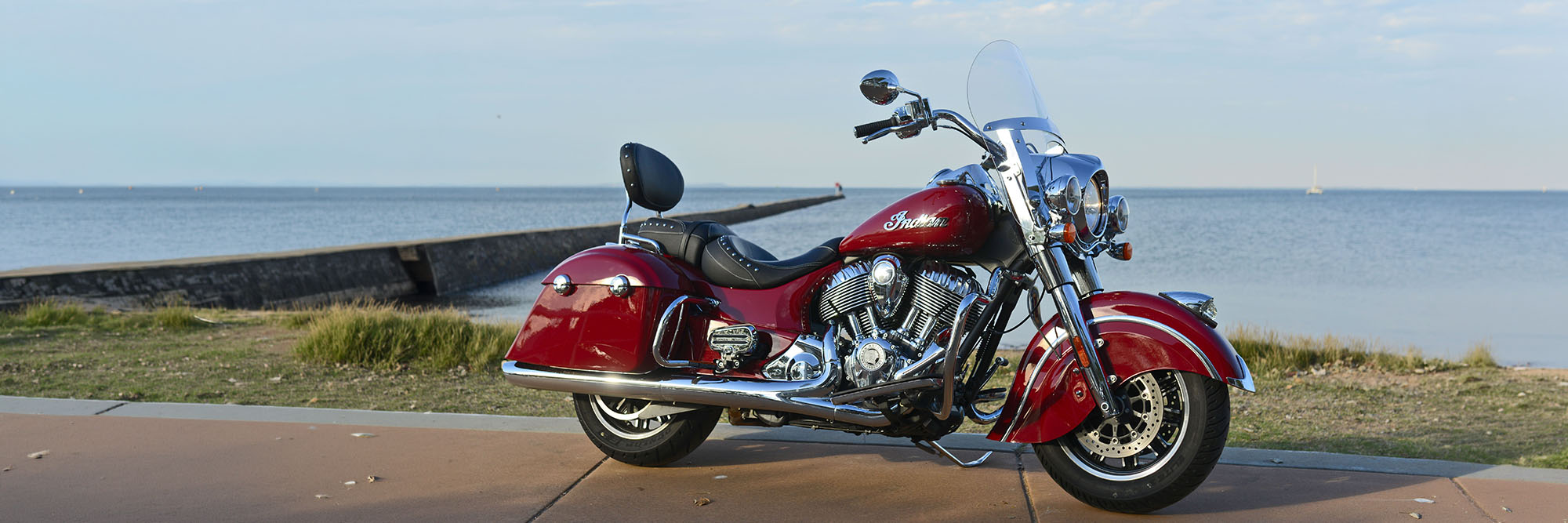
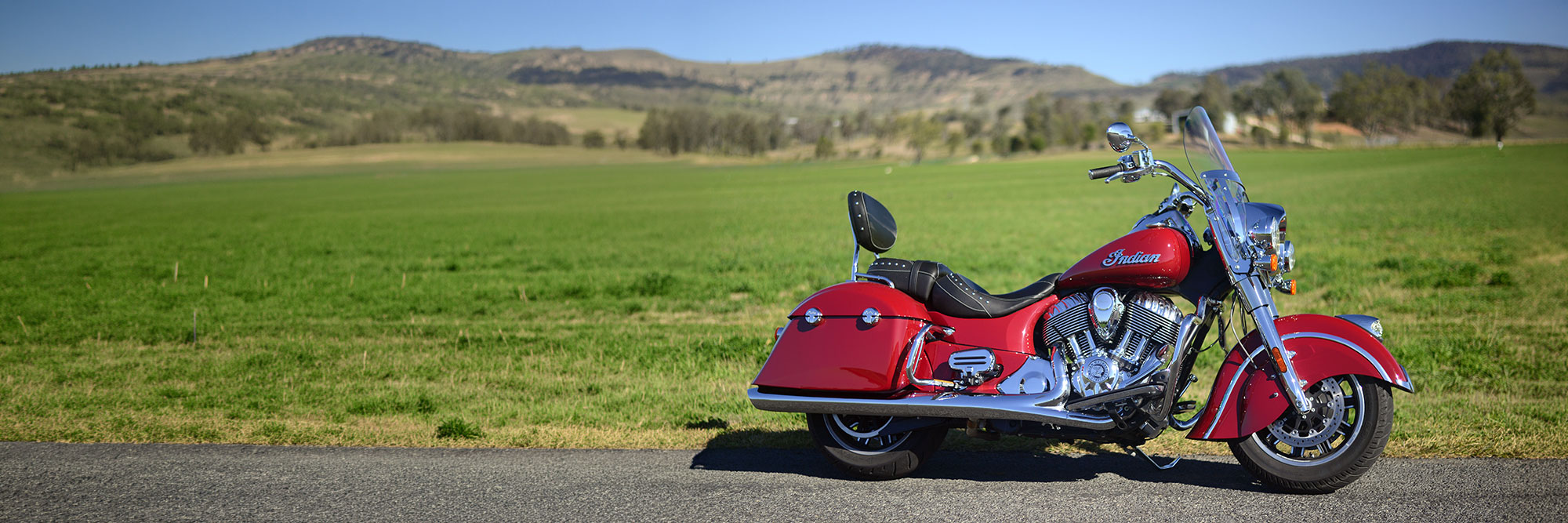
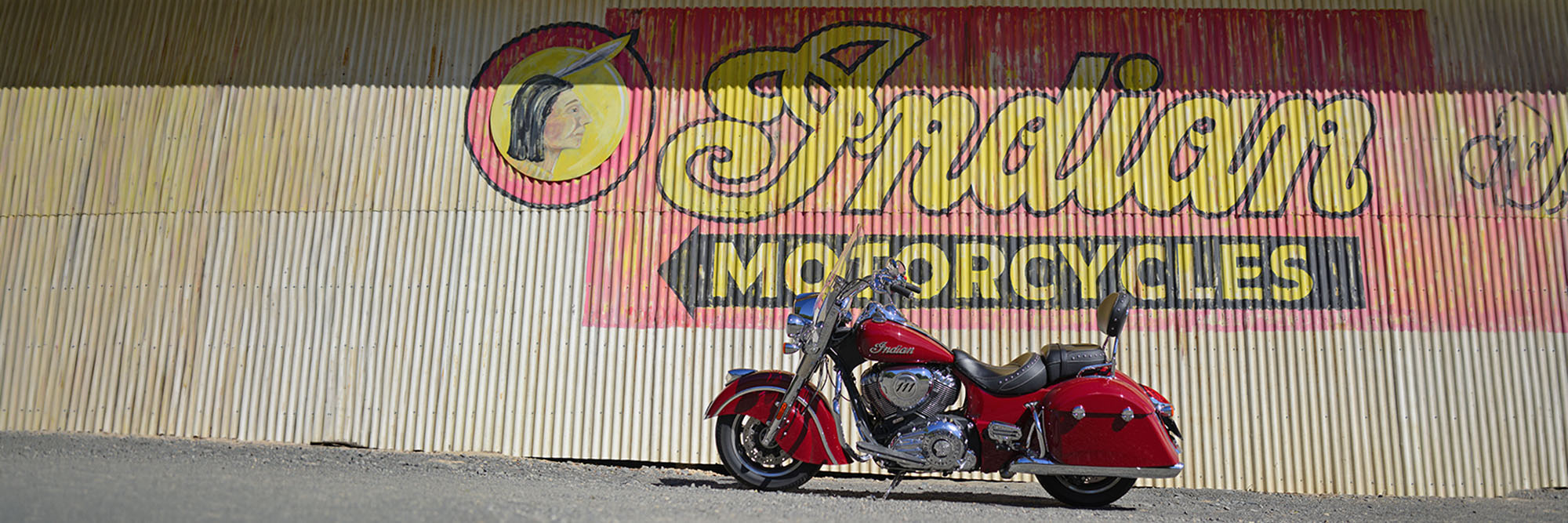
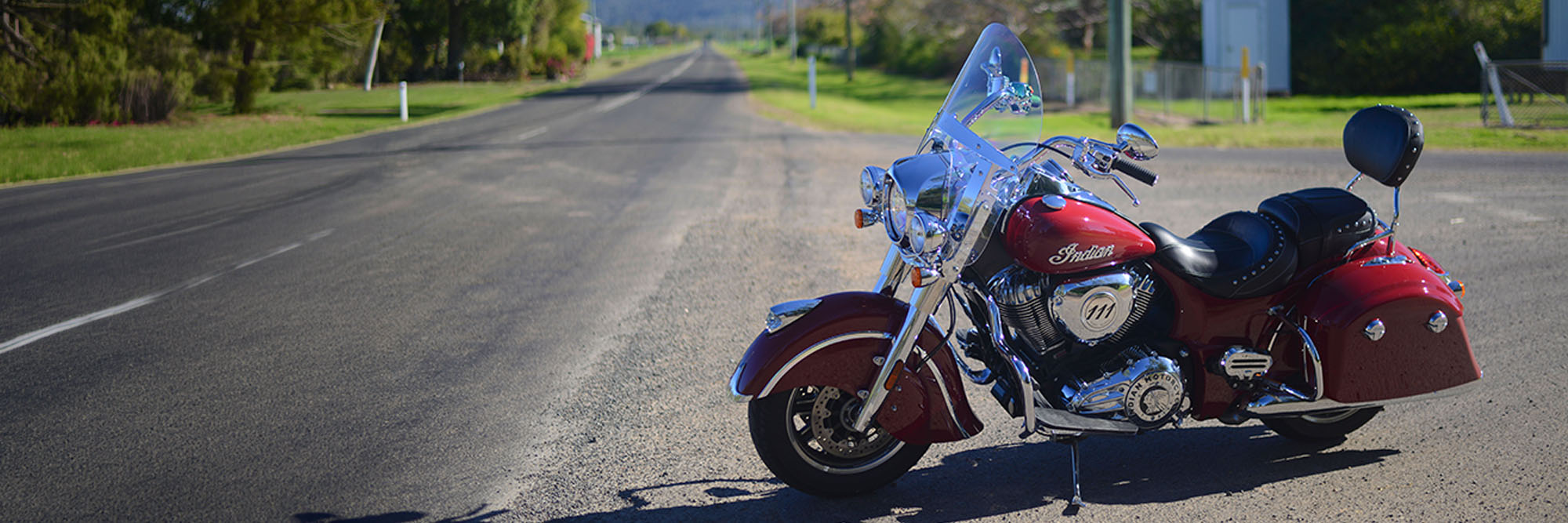
DATELINE JULY 2016: When news of the Indian Springfield first broke it appeared the bike was a variant of the existing naked Indian models. Look closer, though, and it turned out to be the fully dressed Chieftain — without the fairing.

The Chieftain has always been the best cornering of the Thunderstroke equipped Indians and that’s due to slightly different geometry. We’ve always assumed that the Chieftain was set up to accommodate the extra weight of the large fairing, power windscreen, stereo, speakers and instruments that are all mounted on its 48mm telescopic forks.
Accordingly it has steeper rake — 25 degrees compared to the Classics and Vintage’s 29 degrees — while the trail is 5mm less, 150mm as opposed to 155mm. The rake also means that the Chieftain’s wheelbase is a couple of mm shorter, thus delivering a motorcycle that steered a little more quickly and felt like it had better cornering clearance than its stable mates.
Geometry lessons
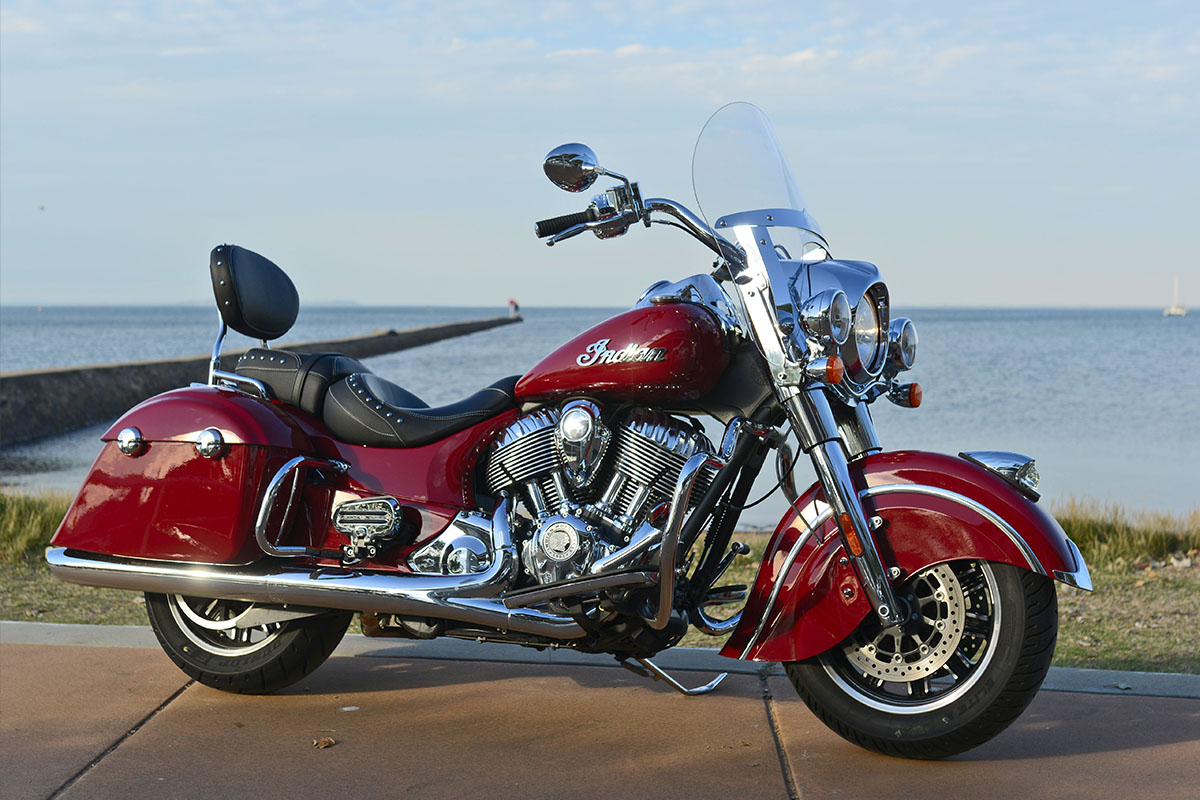
The Springfield has that same 25-degree rake as the Chieftain, but the triple trees have been revised to give it even less trail, 132mm, and a slightly longer wheelbase.
But here’s what I got wrong.
What really blows the ‘weight on the forks’ assumption out of the water is that the Classic weighs 341kg dry, the Chieftain tips the scales at 370kg and the Springfield, somewhat surprisingly, is heavier at 371kg dry.
It appears that the big headlight and massive chromed nacelle, about 8kg, touring windscreen, about 5kg, and light bar, about 3kg, add up to slightly more payload than the Chieftain’s accoutrements.
Regardless of the mass, the result of all this geometric fettling is that the Springfield is the best handling and cornering incarnation of the new Indians so far — and its predecessors were already very capable.
Refined and comfortable
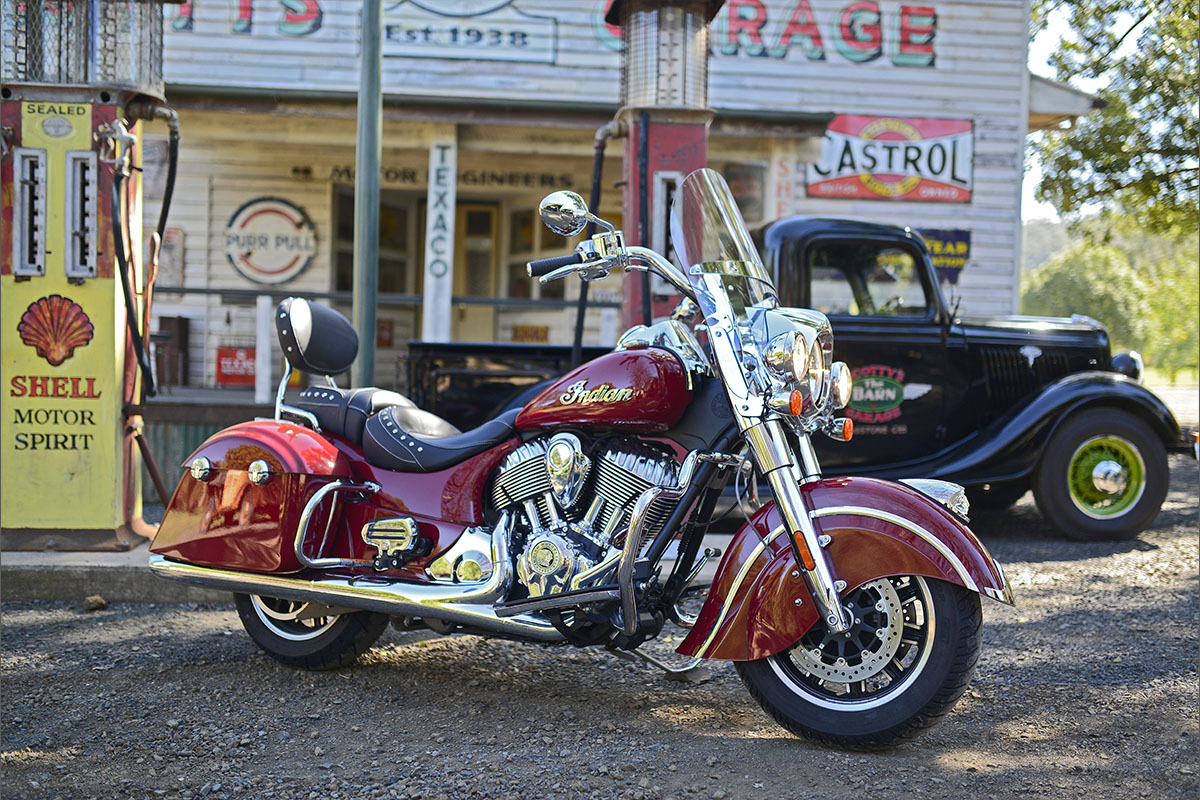
The handling is only one aspect where this model sees improvements. It was the most comfortable, felt the most refined and had the sweetest gearbox of any of the numerous Thunderstrokes I’ve tested so far too.
Comfort-wise, the saddle seems a little plusher than previous models and the handlebars feel different too. It was about as comfortable as I’ve been on a bike.
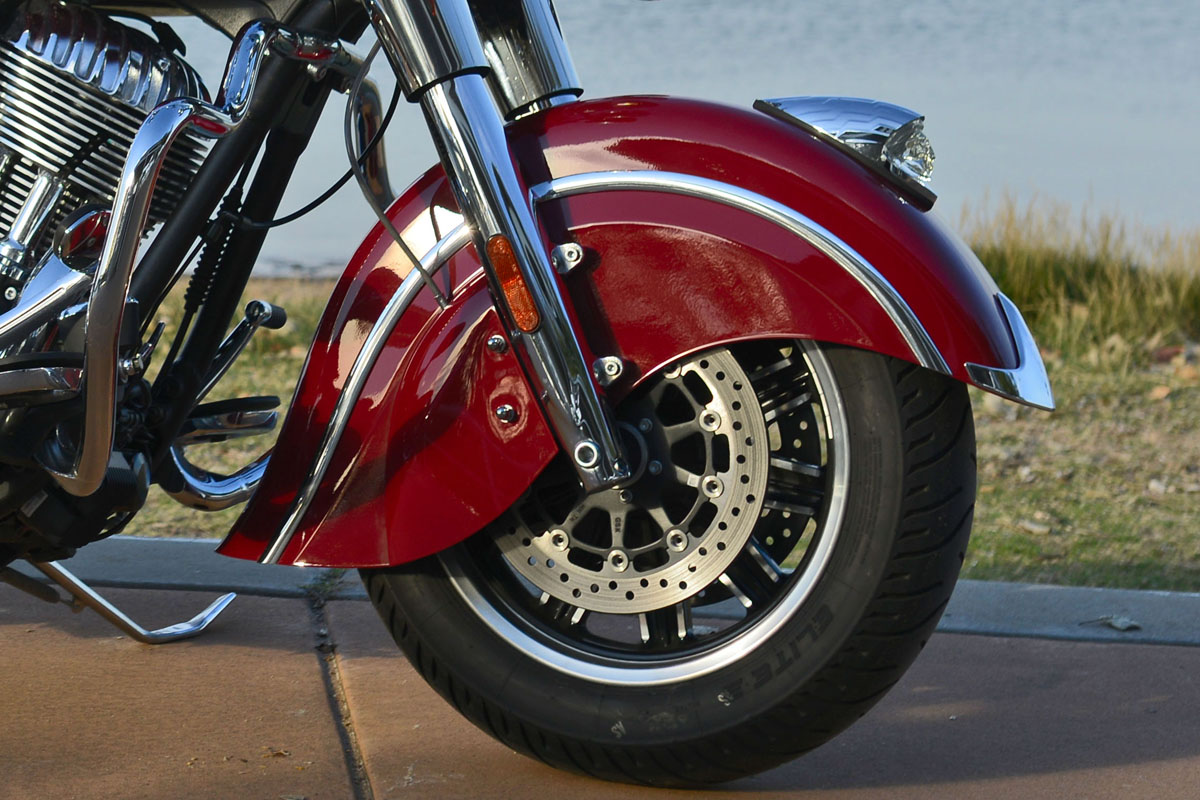
The footboards are wide and the upper surface is slightly sprung to isolate the minimal vibration of the engine. They are also mounted high enough to give excellent cornering clearance and lean angle — without compromising comfort.
It was an absolute pleasure to roll away long sessions on the freeways and toll roads as well as getting amongst it in the foothills. The cruise control worked flawlessly out on the open roads too.
Thunderstroke shove
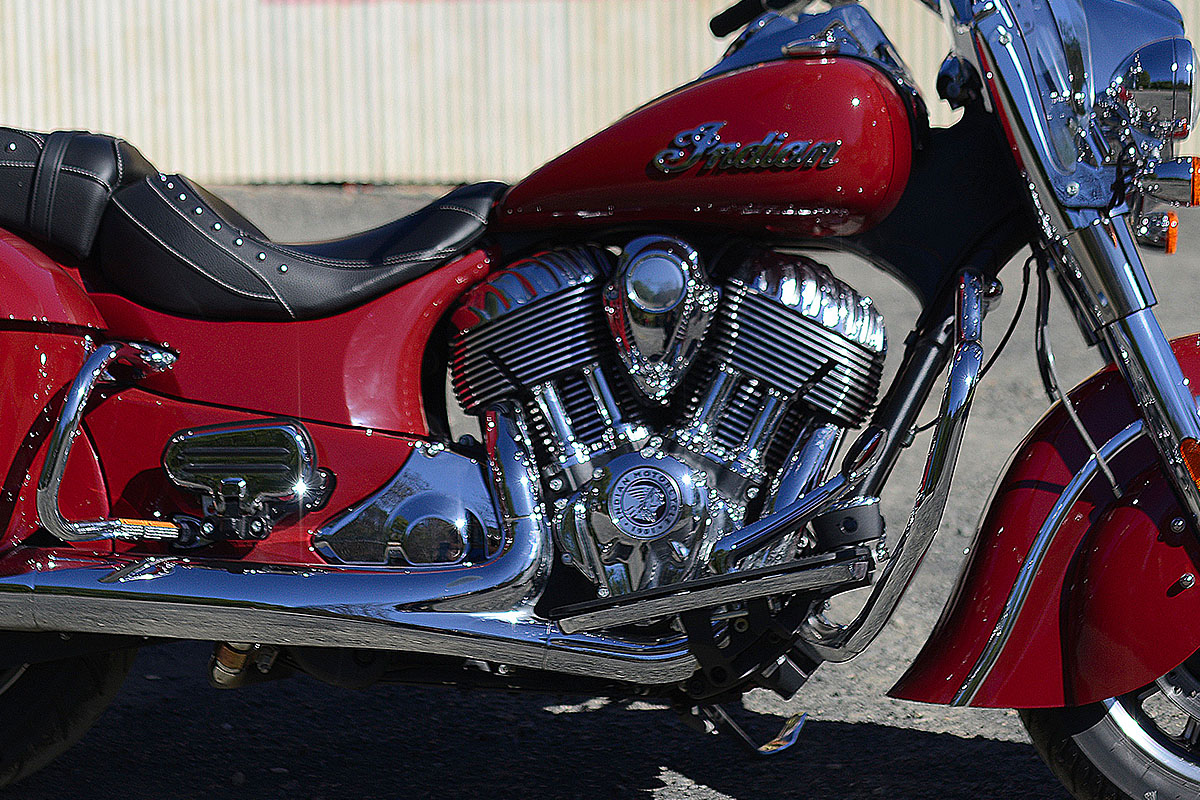
The overtaking power and ‘hurry up’ that comes from the Thunderstroke is also a torque lover’s delight. It gets away from the lights so effortlessly that it sometimes took me aback to see how far back, and how quickly, the tin tops disappeared in the rear view mirrors when giving it a handful from the traffic lights.
It just seems to do it all so easily. Indian claim 138.9Nm at 3000rpm from the 111 cubic inch, 49-degree OHV pushrod V-twin with two valves per cylinder, hydraulic lifters and 9.5:1 compression ratio. The same engine is fitted to all models in the Thunderstroke family.
So far I haven’t been able to find out exactly what Indian have done to the gearbox, but whatever they did — it sure worked. Not that they were cantankerous at all before this model, but this Springfield had a gearbox good enough to mention twice.
The clutch is light and easy and the gear primary drive and belt final give a very direct feel. So tight is the drive train that on throttling down to low speeds the EFI can cause a slight surge as it finds idle revs — but it’s only minor.
Chassis and brakes
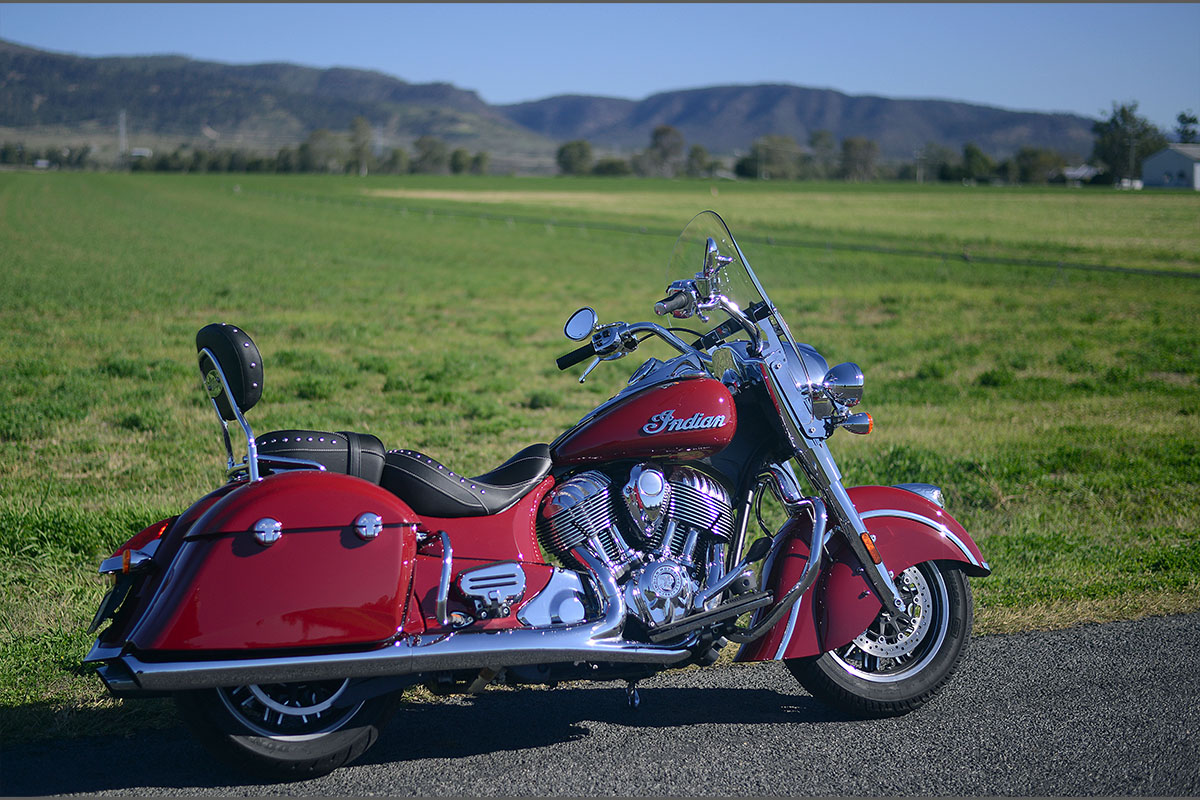
Apart from the slight geometry changes there aren’t many other differences on the frame and chassis spec sheets of the Chieftain and the Springfield. The air adjustable pre-load on the rear monotube suspension is common to both, as are the cast 16-inch wheels front and rear.
The dual floating disc front and single floating disc rear brakes pull the big units up just fine. They are genuine two-finger fronts and ABS is fitted as standard.
Feel good
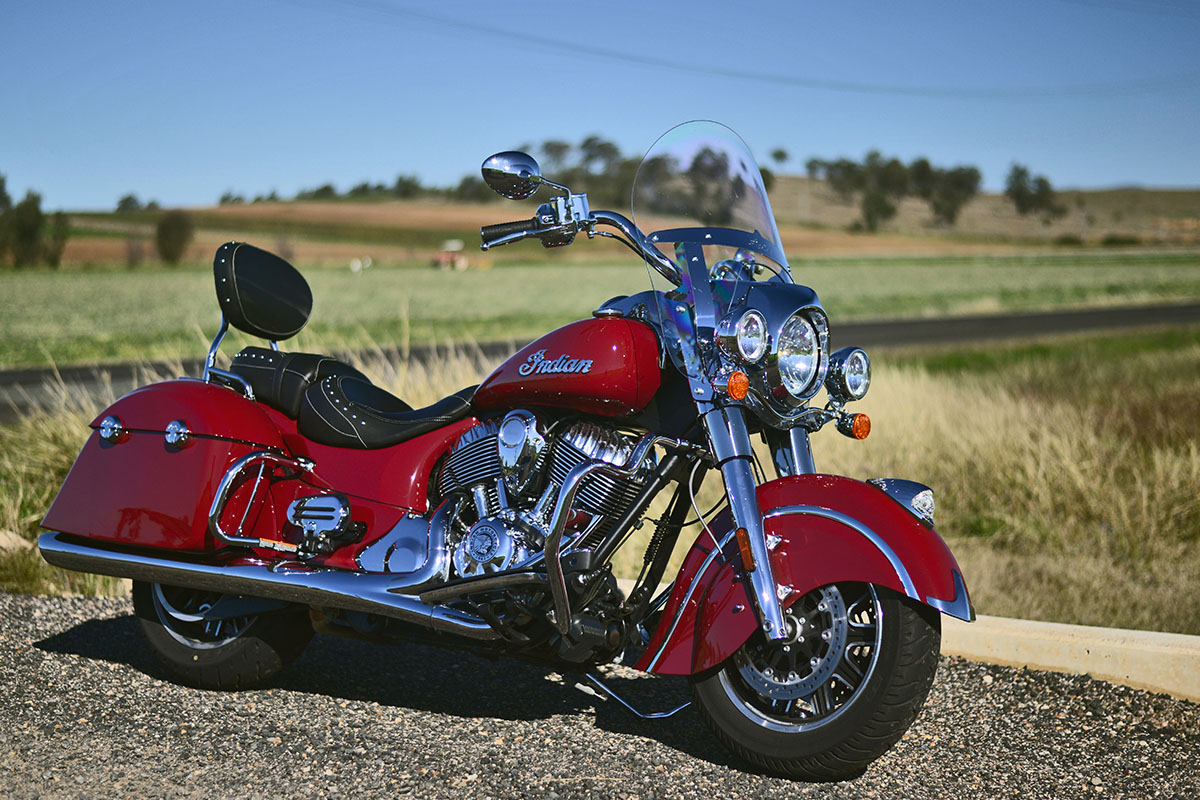
The Springfield was pretty much a lust affair for me from the moment I first hopped on it. Over the course of the test I put in some day rides and country runs that were simply outstanding.
It also worked brilliantly as a city and boulevard cruiser. Relaxed, comfortable, unique, and I just felt good about myself every time I rode it.
It’s feature laden, with cruise, central locking, self-cancelling indicators, security fob, multi function trip computer and a host of other high tech hidden beneath its heritage styling.
More people engaged me on this bike than the other Indians I’ve been on too.
The Indian question
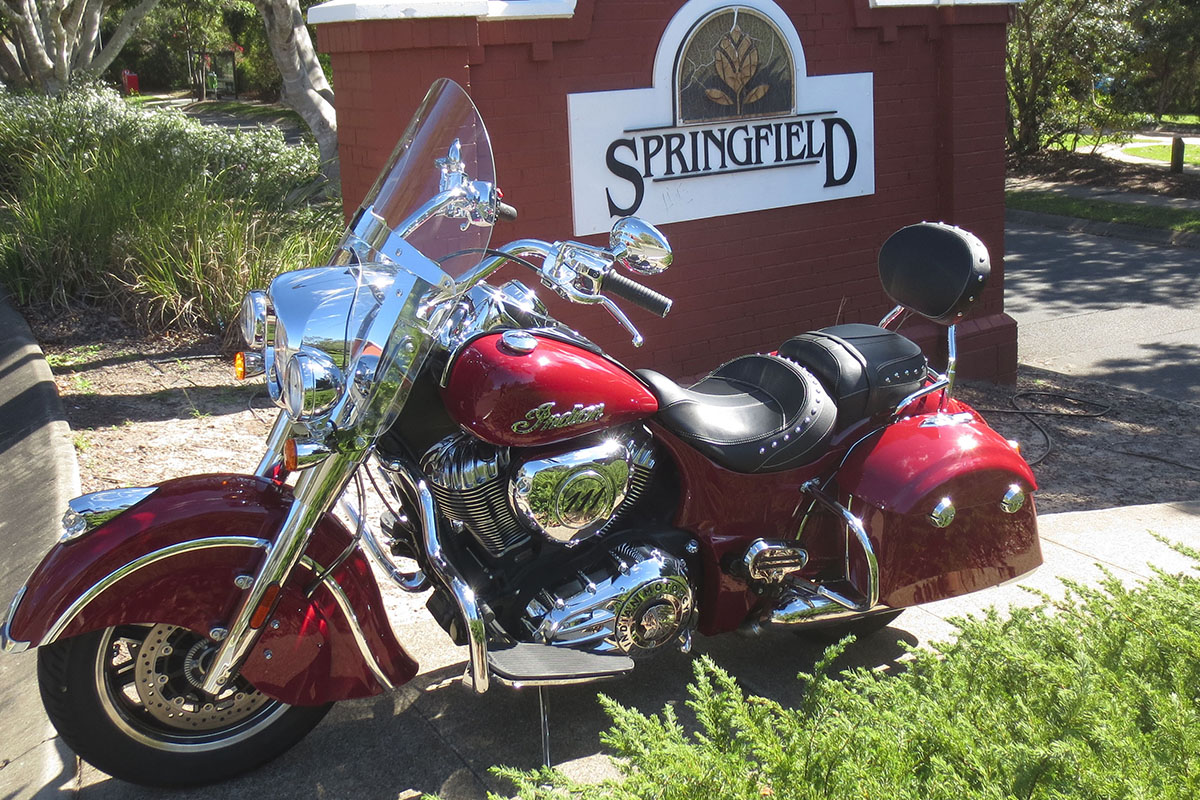
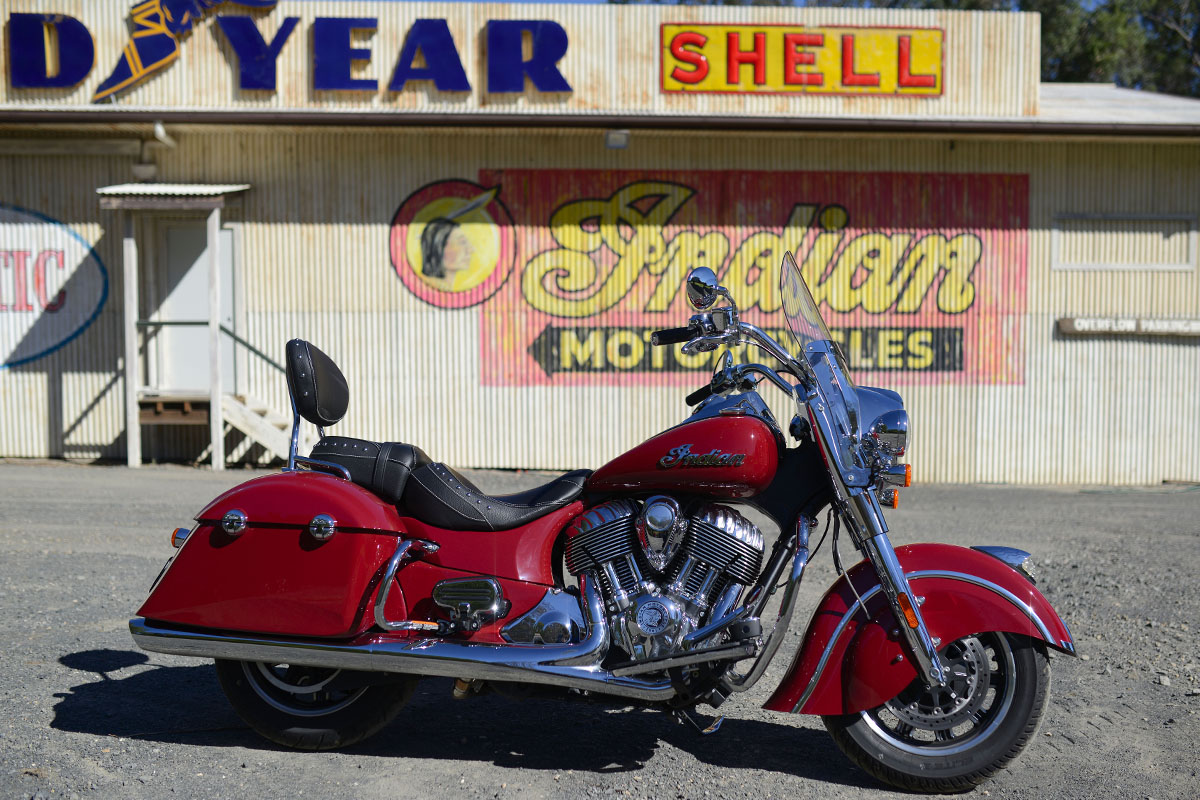
“Is that the Indian that broke the record?” asked the bloke in the hatchback at the traffic lights and a heap of people questioned me about the bike everywhere I parked it.
“Yes, they still make them. Yes, it is beautiful. Yes, your brother’s Indian was probably built in the 40s.”
The sort of engagement that comes with a premium motorcycle.
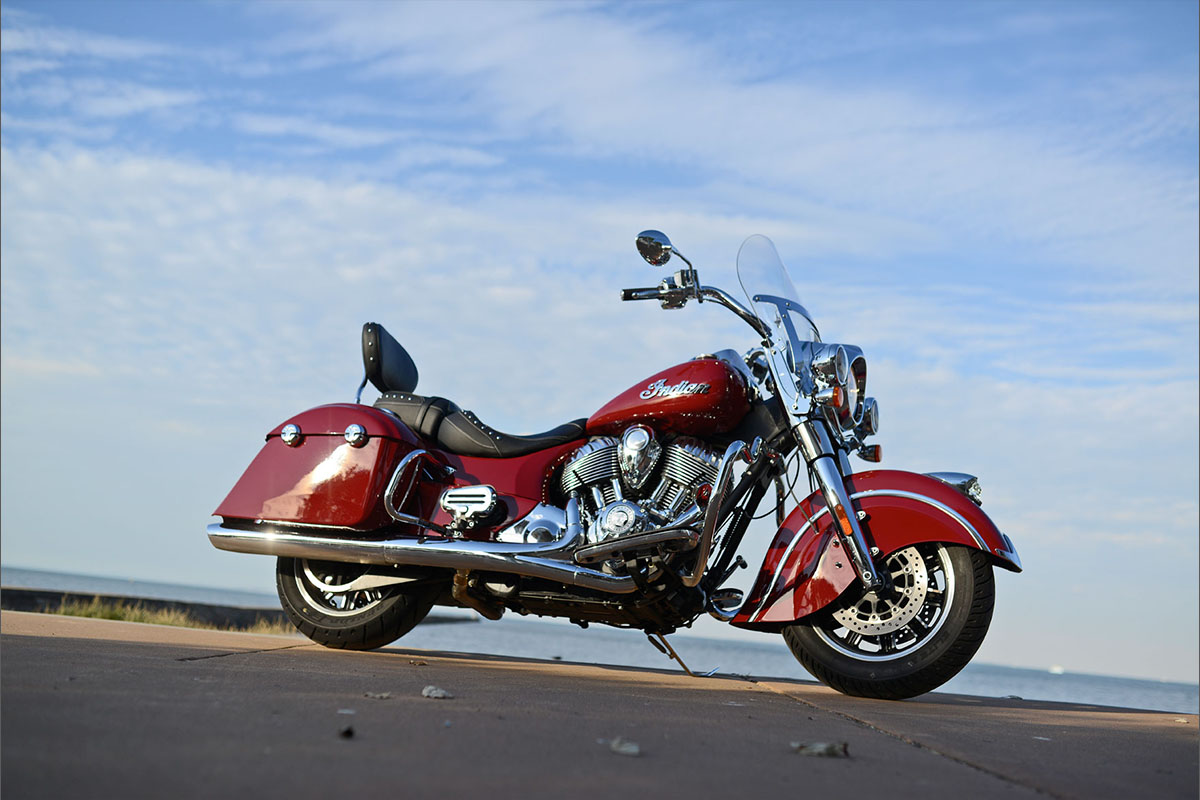
Indian Springfield
Performance
Peak torque119.2 ft-lbs / 138.9Nm
Peak torque RPM3000rpm
Fuel capacity20.8 litres
Engine
TypeThunder Stroke® 111
Displacement111 cu in / 1811cc
Bore x stroke101mm x 113mm
Compression9.5:1
Fuel systemClosed loop EFI / 54mm bore
Drivetrain
Primary driveGear drive
ClutchWet, multi-plate
Final drive2.2:1
Frame
Front suspensionTelescopic fork, 119mm travel
Fork diameter46mm
Rear suspensionSingle shock with air adjust, 114mm travel
Wheelbase1701mm
Rake / trail25° / 133mm
Brakes & tyres
Front brakesDual 300mm floating rotors, 4-piston caliper
Rear brakeSingle 300mm floating rotor, 2-piston caliper
Front tyreDunlop® Elite 3 130/90B16 73H
Rear tyreDunlop® Elite 3 Multi-Compound 180/60R16 80H
Dimensions
Seat height660mm
Length2583mm
Width / height990mm / 1442mm
Weight372kg empty tank / 388kg full of fuel
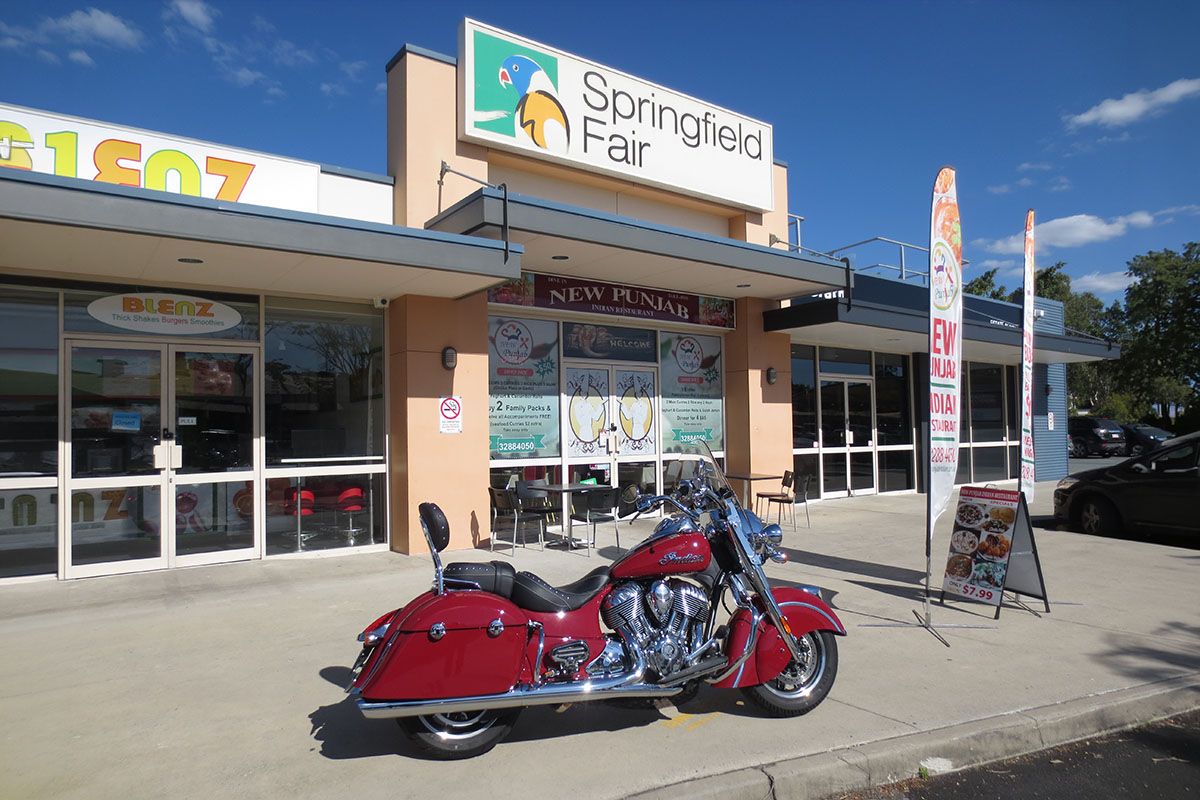
Springfield Notes
The Springfield sits in a neat spot in the Indian range: hard bags and touring manners without the full Chieftain fairing.
It carries the heritage look, but the chassis changes give it sharper steering and better cornering poise than expected from something this big and polished.
The test bike’s appeal was not just spec-sheet deep.
It was the mix of torque, comfort, polish and old-school visual theatre that made it feel special every time it rolled out.